English
Goals of English
- 1To get every student to acquire a solid command of English.
- 2To get students to understand sentence structure and communicate in English sentences that they create themselves.
- 3To get students to use their language skill to try and get to know others, by interacting with people in Japan and overseas in a graceful and cheerful way.
Points of focus
- Give importance to the experience of using English in classes of small size and make sure that every student learns to pronounce and speak, and to read and write sentences correctly.
- Get students to establish expressions about themselves and things they are familiar with, and to develop them so that they learn to talk about themselves and Japanese culture authentically in a coherent series of sentences.
- Incorporate many presentation activities to foster a desire to communicate with and understand others, as well as to have a friendly attitude toward people from various backgrounds and cultures.
Number of classes and teaching style
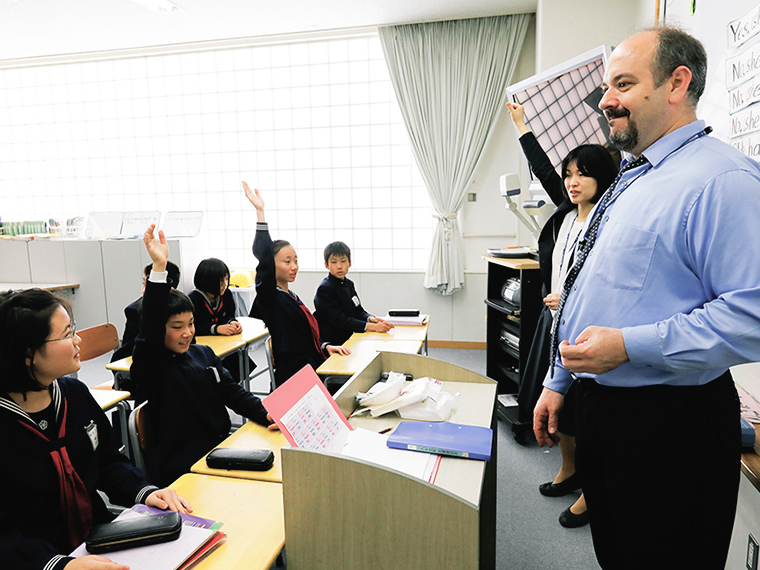
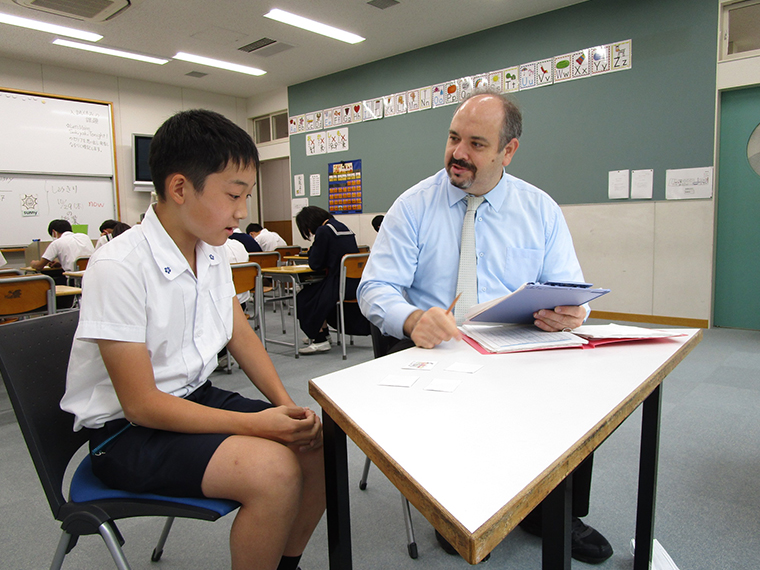
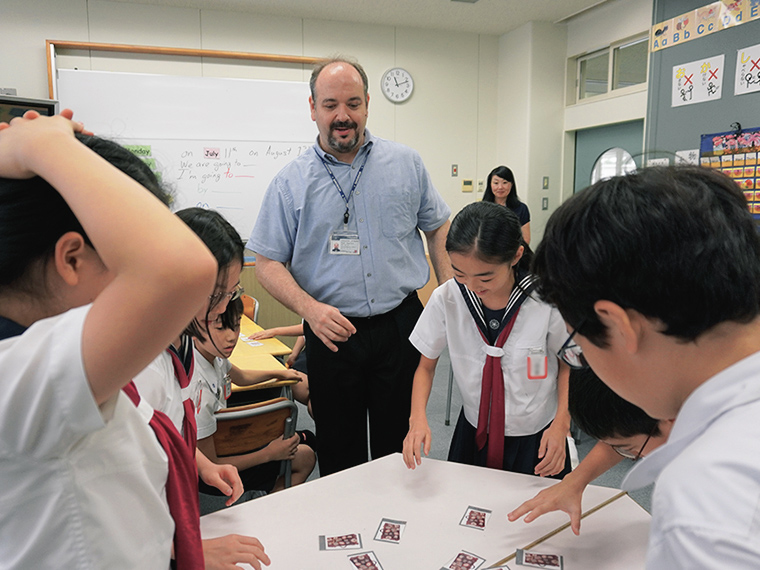
Students have English classes one hour per week in Grades 3 and 4 and two hours per week in Grades 5 and 6. In all grades, classes are divided into two groups of 16 to 17 students. Grades 4, 5, and 6 include classes with team teaching by a Japanese teacher and a native English speaker. Grade 6 students have all classes with this team teaching.
Specific initiatives
In all grades, the whole class practices together using games, songs, picture books, etc., listening carefully to English phrases and repeating them to get a feel for the language at first. After they get used to new words and phrases, students are given many opportunities to practice speaking individually through role-playing using textbooks and conversations with teachers and friends.
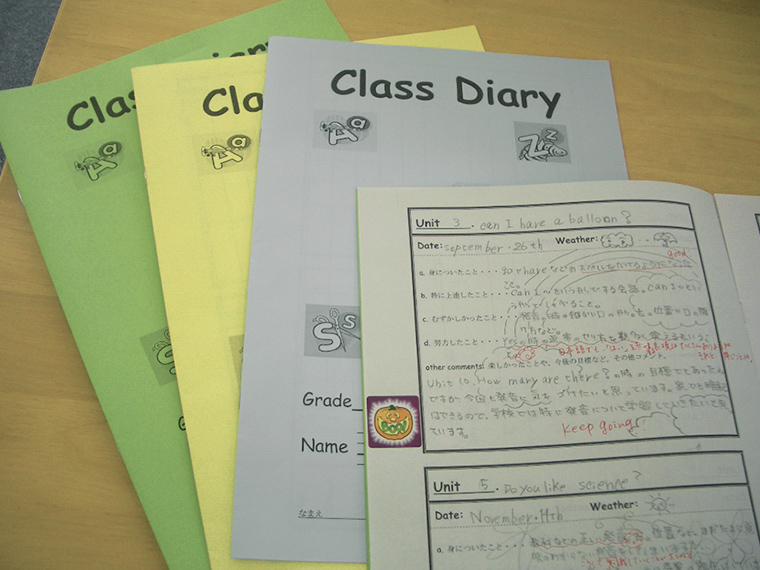
To check the proficiency of students in the four skills of reading, writing, listening, and speaking, we regularly conduct tests. At the end of each unit, students also write a “class diary” to record their reflections on learning English. By reading what students write about what they enjoyed, what they found difficult, what they improved in, and what they tried hardest in, etc., the teachers can gauge each student’s attitude and thoughts about English, learning things that were not evident in classroom work.
Exposure to other cultures also helps children to become more aware of their own culture. Students are introduced to foreign classics such as Mother Goose rhymes and Aesop’s Fables and learn to enjoy the meaning of nursery rhymes and other rhyming poetry in English. While naturally acquiring English prosody (pronunciation, intonation, and stress), they develop a sense of the background, culture, and sensibility of the people of English-speaking countries.
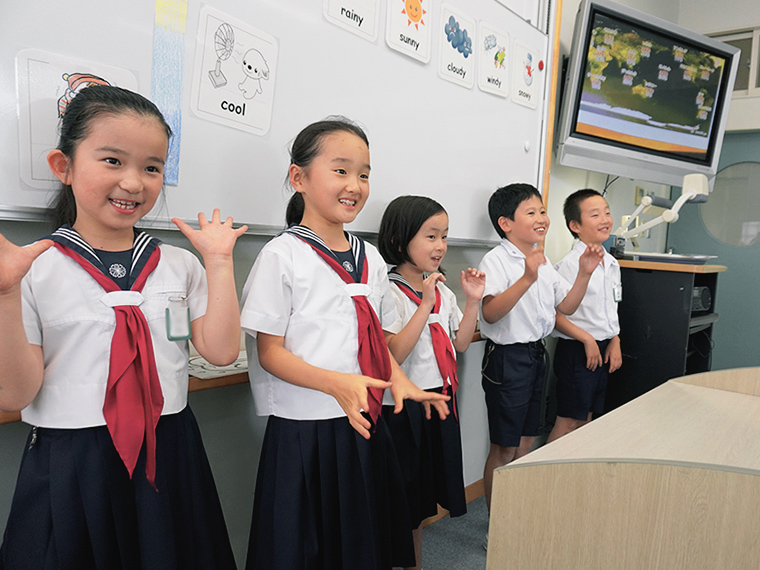
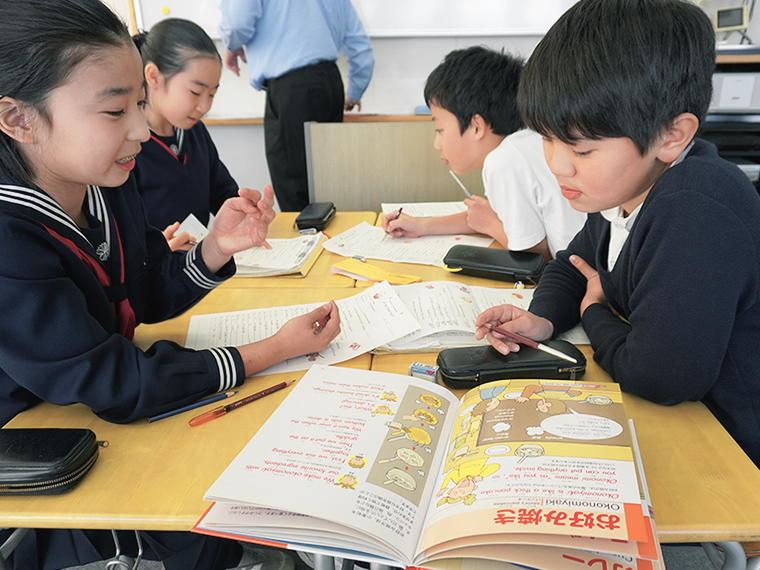
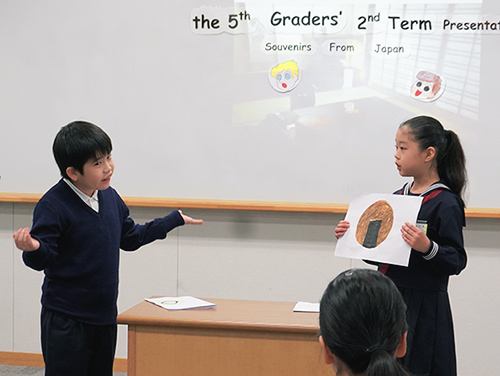
Through comparison with their own experiences, children also gain more insight into Japanese culture. In Grades 5 and 6, students learn about Japanese games, Japanese food, Japanese tourist spots, and more in English. They work in groups to create conversations and present them in front of the whole class.
Presentation activities enable students to recognize that cooperating in groups and communicating creatively with others are essential skills. Students also develop the ability to construct their own sentences and compositions using the expressions they practised and learned in their classes. Through repeated practice of preparing presentations to summarize what they have learned, students develop communication skills, as well as the confidence and poise to deliver a presentation in front of a large audience. Working together in groups to create presentations, with kindness and consideration for their fellow group members, students learn to express themselves self-assuredly with enthusiasm.
At presentations, students also assess each other. The ability and willingness to evaluate others with a fair mind will be very useful in our increasingly multicultural society.
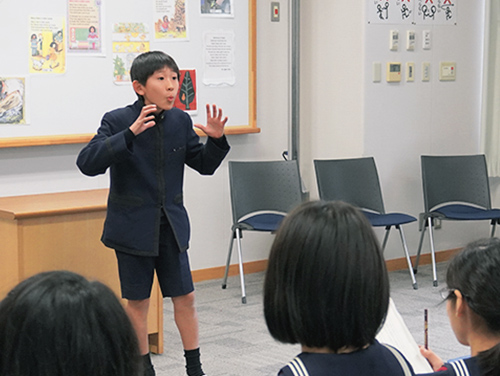
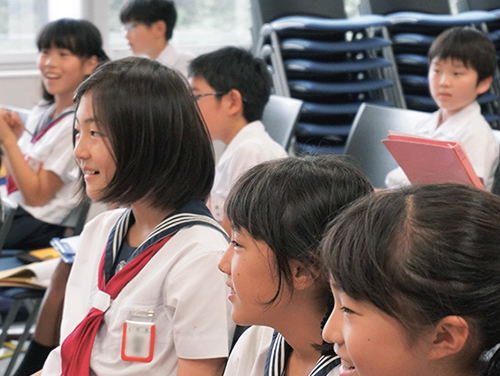
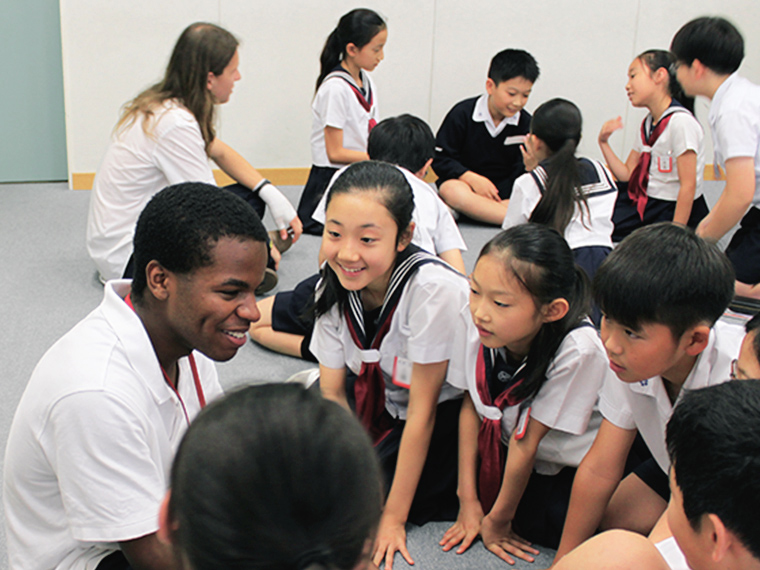
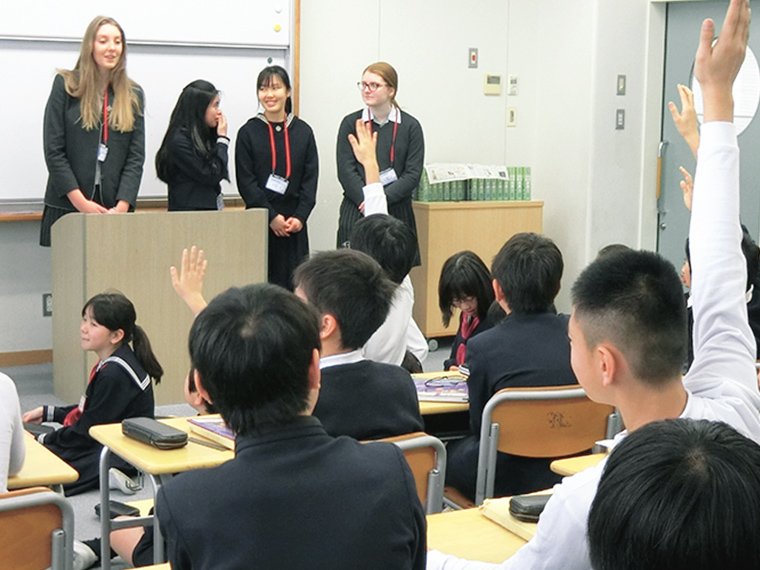
When overseas students visit the school, they join our English classeses. Students ask each other about their respective countries in English, and overseas students from non-English speaking countries are asked to offer an introdution to their country’s language and culture to the class. These are opportunities for students to experience multiculturalism using the English ability they have acquired. Through such experiences, students develop the ability to communicate readily with all kinds of people, both in Japan and abroad.