Physical Education
Goals of Physical Education
-
Training the mind and body. Not just training, but also working with peers on exercises that are appropriate for each grade:
- To enjoy exercising the body
- To cultivate a spirit of perseverance
- To cultivate a sense of compassion
Point of focus
- To design a curriculum that provides students with well-balanced physical exercise experiences that strengthen both mind and body. Also, to train students to develop the decorum and good manners characteristic of Gakushuin in the classroom and facilitate interaction between different grades. Through this, students experience the importance of communicating and teaching/learning from other students.
Various exercises in Balanced
As shown in the table below, we have put together a balanced exercise curriculum for students. The physical education content is taught according to grade and developed in stages from one grade to the next.
● Exercise structure for Primary School students
| Grade | Grades 1 & 2 | Grades 3 & 4 | Grades 5 & 6 |
|---|---|---|---|
| Area | Basic exercise (including track and field) | ||
| Apparatus gymnastics | |||
| Ball play | Ball games | ||
| Expressive activities | |||
| * | Health | ||
Basic exercises
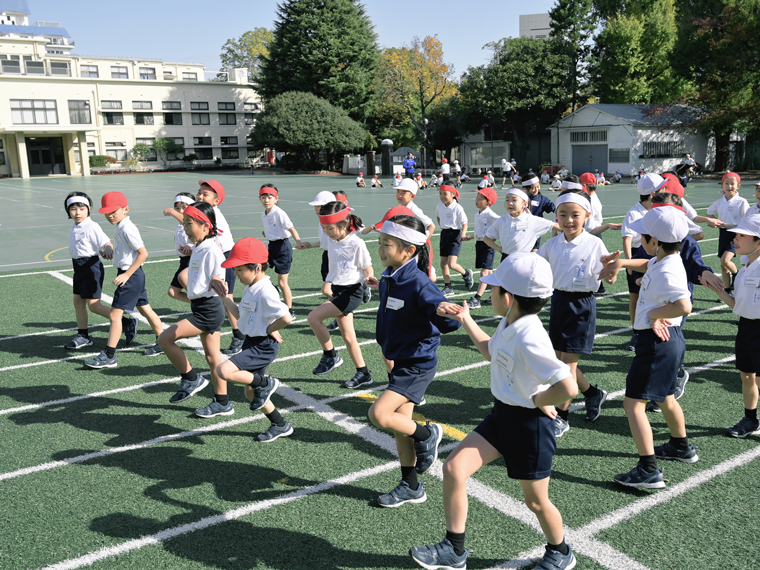
We foster the physical skills necessary for all kinds of physical activity according to grade. We also make sure that students enjoy exercising in a friendly manner, following essential rules.
They practice running, jumping, throwing, jump rope, body relaxation, radio exercise, duo gymnastics, running with various movements, circuit training, group activities, etc.
All students practice Radio Exercise during a morning assembly. In the winter, students of every grade eagerly work on a school-wide jump rope competition. Also, in winter, Grades 4 to 6 students run in the schoolyard in the morning; it’s called “Morning Marathon.”
Apparatus gymnastics
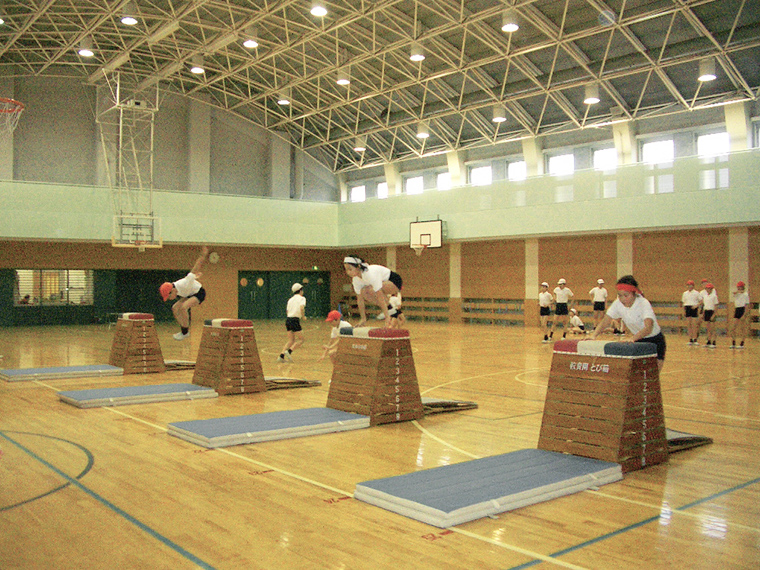
Students learn to use exercise apparatus and equipment safely and creatively. According to their grade level, they develop the skills for inversion, balancing, rotational movement, dexterity, and strength.
From the middle grades, the students also learn to evaluate each other’s skills and assist each other. This enables them to help each other in improving their skills.
As well as breaks between classes, students use the playground equipment and horizontal bars in the school grounds during physical education classes.
To prevent injuries due to falls, the ground under the playground facilities is covered with spongy safety mats. This encourages students to be more adventurous and dynamic.
They can try horizontal bars, mats, vaulting boxes, climbing bars, wall bars, and other equipment.
The school gymnasium includes a large arena and a small arena with heating and air conditioning. This means that lesson plans are rarely disrupted, even when there is some overlap in classes using the gymnasium.
Swimming
The school offers swimming classes with an emphasis on preserving tradition.
Rather than the kind of competition-centred swimming skills taught at swimming schools, the Primary School focuses on teaching swimming skills (breaststroke, sidestroke, and treading water) that students can use in open water.
In the lower grades, students begin by getting accustomed to the water. In Grade 6, the Primary School’s swimming education culminates at the Numazu Swimming Camp. The goal is to get students to swim for extended periods of time in formations in the constantly changing current in the sea, adapting themselves to their natural surroundings.
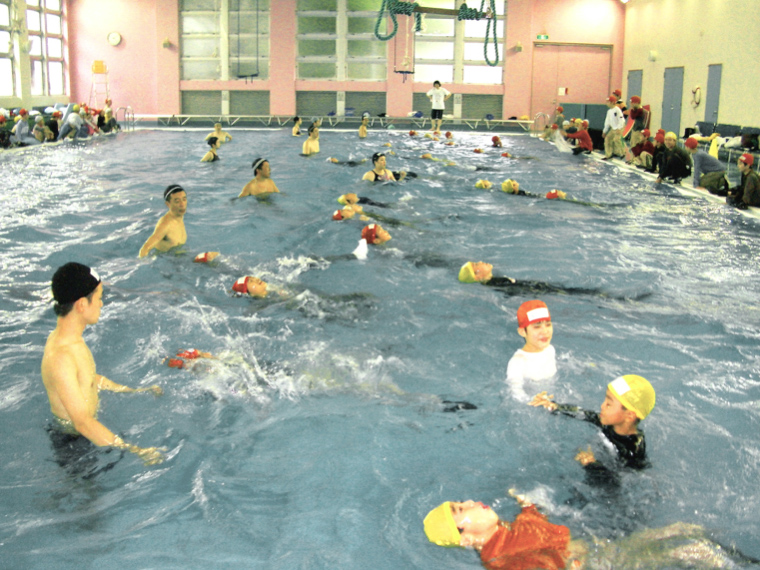
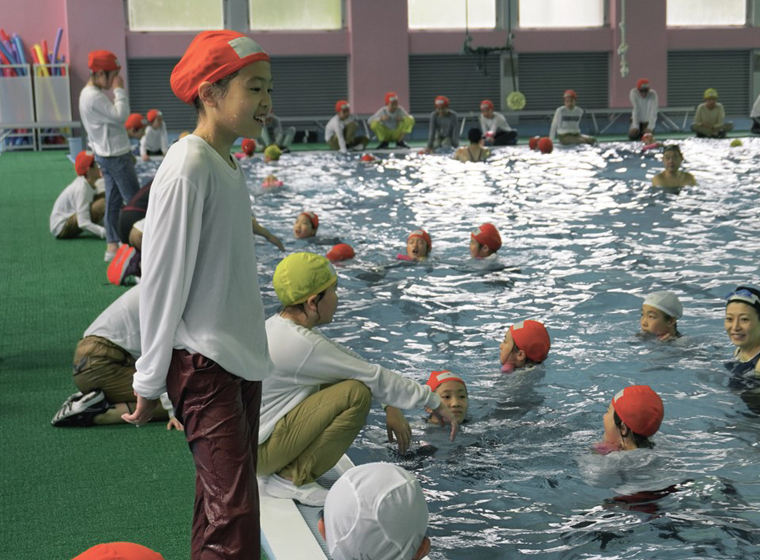
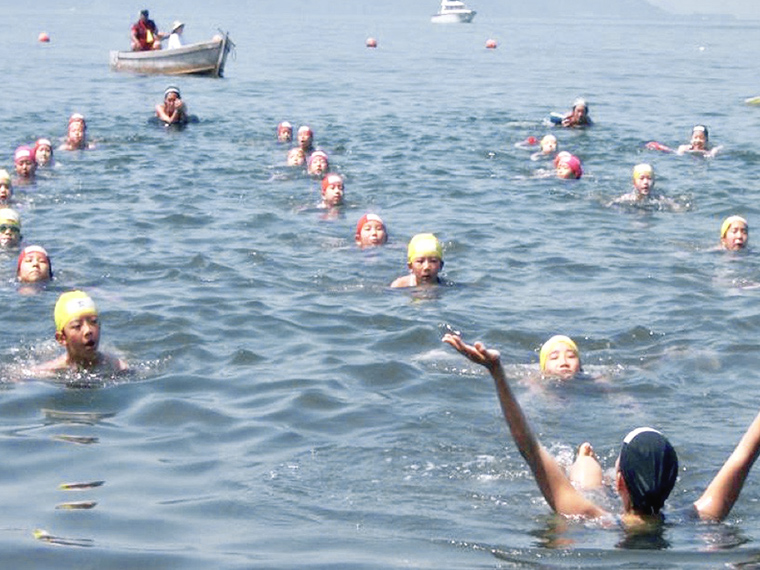
The buildings of the Gakushuin Numazu seaside dormitory are traditional Japanese houses with wooden walls with heavy ceramic roofs built in the Meiji era. Lodging together as a group, students experience and learn aspects of traditional Japanese culture such as hanging mosquito nets, swimming around Japanese-style wooden boats, and wearing red loincloths (for boys).
In addition to school teachers, assistants from the Gakushuin Numazu Swimming Association, an organization supporting swimming instruction run by Gakushuin alumni (which follows the ancient Japanese Kobori-ryu swimming technique) participate in the actual swimming sessions to provide guidance and assistance. Around 10 assistants participate in pool swimming lessons at school, while around 30 assistants participate in the Grade 6 swimming camp at the Numazu seaside dormitory, creating a teaching environment that is finely responsive to the different abilities of the children.
The swimming pool is an indoor pool with a movable floor. Classes are held at appropriate water depths for each grade level. Setting the water depth to a shallow level allows even children who feel anxious about swimming to take part in classes with peace of mind.
Ball games
In the lower grades, students develop their physical dexterity and agility by performing basic maneuvers such as rolling, bouncing, throwing, and catching a ball. More specifically, they are taught how to throw a ball through a hoop, hit and throw a ball by themselves, pass and dribble in pairs, and play dodgeball.
In the middle and upper grades, students try to develop their skills to a level appropriate to their grade.
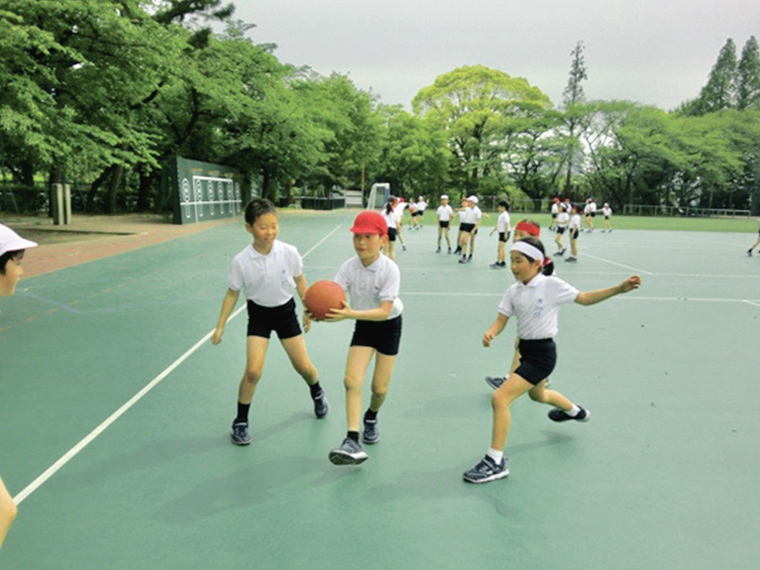
In games, we put importance on respect and consideration for fellow players. We also teach students to analyze problems and identify challenges in the flow of the game, so that they can take opportunities to improve their abilities.
Specifically, students play dodgeball, kick-baseball, soccer, port ball, and basketball.
The school grounds are entirely paved with soft urethane. The soccer ground and athletics track surface is an artificial turf filled with rubber chips.
As a result, both surfaces are effective to prevent injuries like safety mats in the playground. This means that injuries from falls are rare, so the children can engage boldly in physical activities.
The surfaces also drain well and dry quickly, so even when it is wet, they can be used as soon as it stops raining.
Expressive activities
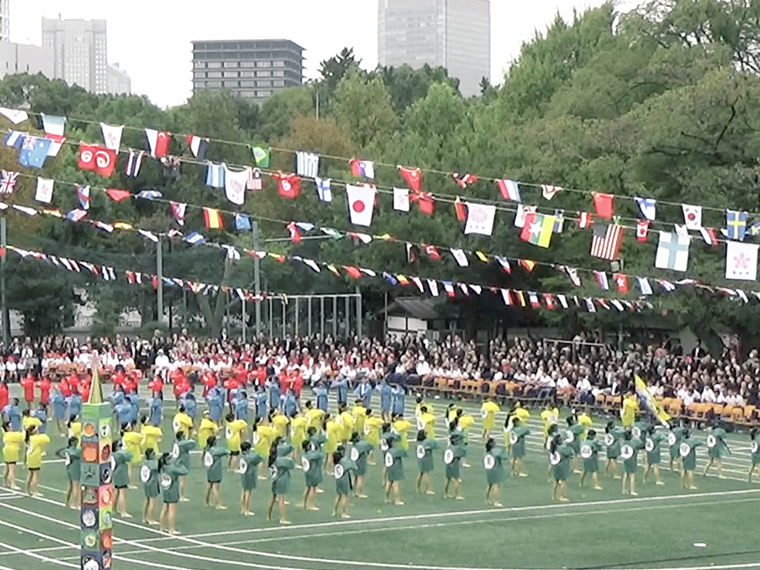
Students enjoy dancing to the rhythm of music and expressing themselves freely by pretending to be something else. They also cooperate with their peers to create a single piece of artistic dance.
At events such as the Primary School Festival and a ski camp called “Snow School,” the entire school and grade group enjoy folk dancing as a way of forging memories as they cherish the special atmosphere of the occasion.
They perform folk dances, group dance performances on the Sports Day, and imitative play (e.g., playing ninjas), etc.
Health
Health classes are offered from Grade 3. We teach students about the importance of health, physical development, changes that occur in the body and mind in adolescence, how to prevent and treat injuries (including those suffered in road accidents), how illnesses occur, and lifestyle-related diseases.
Classes on introductory sex education and menstruation guidance are conducted by a school nurse with a teaching certificate called “Yogo-teacher.”
The six years of primary school correspond to the period during which children transition from baby teeth to permanent teeth.
For this reason, every year in June, during “Teeth and Mouth Health Week,” a dental doctor teaches a class to Grade 3 children as part of their health education.